

Z-FUTURE II
GenZ for Careers of the Future
The second edition of the extremely successful project of the 3rd Dragon Association in 2026 aimed at strengthening the capacities of young people for future careers through a series of educational activities and events.
RESULTS OF ART CONTEST
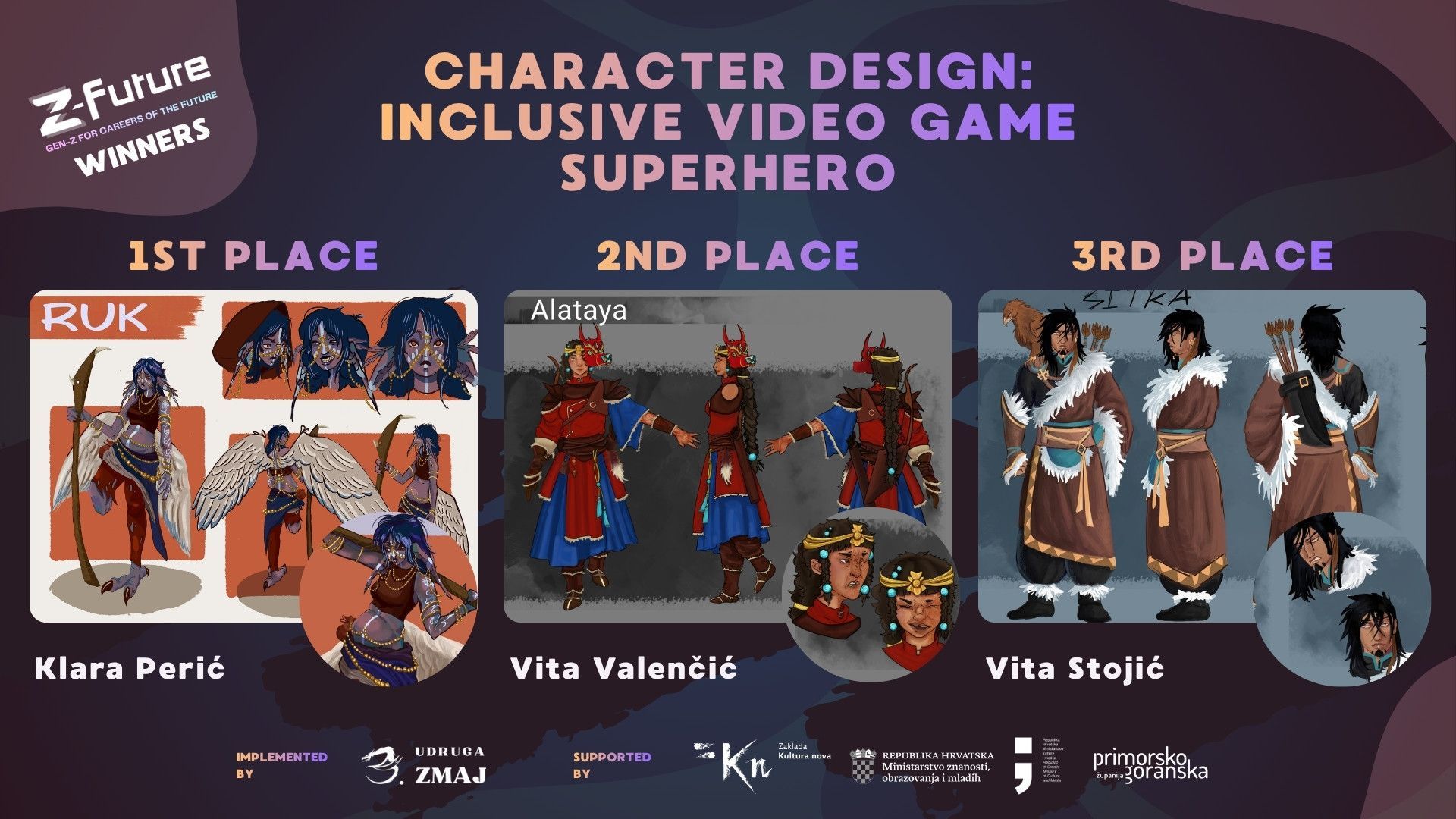
The Association 3. zmaj thanks all the students for participating in the art competition “Character Design” as part of the Z-FUTURE II project (GenZ for Careers of the Future).
We received a multitude of extremely creative and thoughtfully designed works that demonstrated the maturity, empathy, and exceptional talent of all the students. Many of you submitted exceptionally creative pieces, and we can envision a bright future for your careers in the video game industry! The theme of inclusion was very important to us, and the expert jury thoroughly read and discussed each submitted work.
Our expert jury had a very difficult task of selecting the best among the excellent, and we proudly announce that the following works have been declared the best:
1st place:
Klara Perić
School of Applied Arts and Design, Zagreb
2nd place:
Vita Valenčić
School of Applied Arts in Rijeka
3rd place:
Vita Stojić
School of Applied Arts and Design, Zagreb
CONGRATULATIONS to the winners!
We also want to reward 7 additional works that demonstrated high quality both in artistic expression and in showcasing inclusivity and understanding of the theme. The selected works are from the following students:
- Mihael Bukša, First Economic School, Zagreb
- Lana Fućkar, Technical School Virovitica, Virovitica
- Mia (Lucian) Kolar, School for Graphics, Design and Media Production, Zagreb
- Nola Širić, Gymnasium Matija Antun Reljković, Vinkovci
- Lea Belašković, School of Applied Arts and Design, Zagreb
- Filip Naimkadić, Secondary school Vrbovec, Vrbovec
- Erin Lukač, Secondary Vocational School Varaždin, Varaždin
AWARD CEREMONY
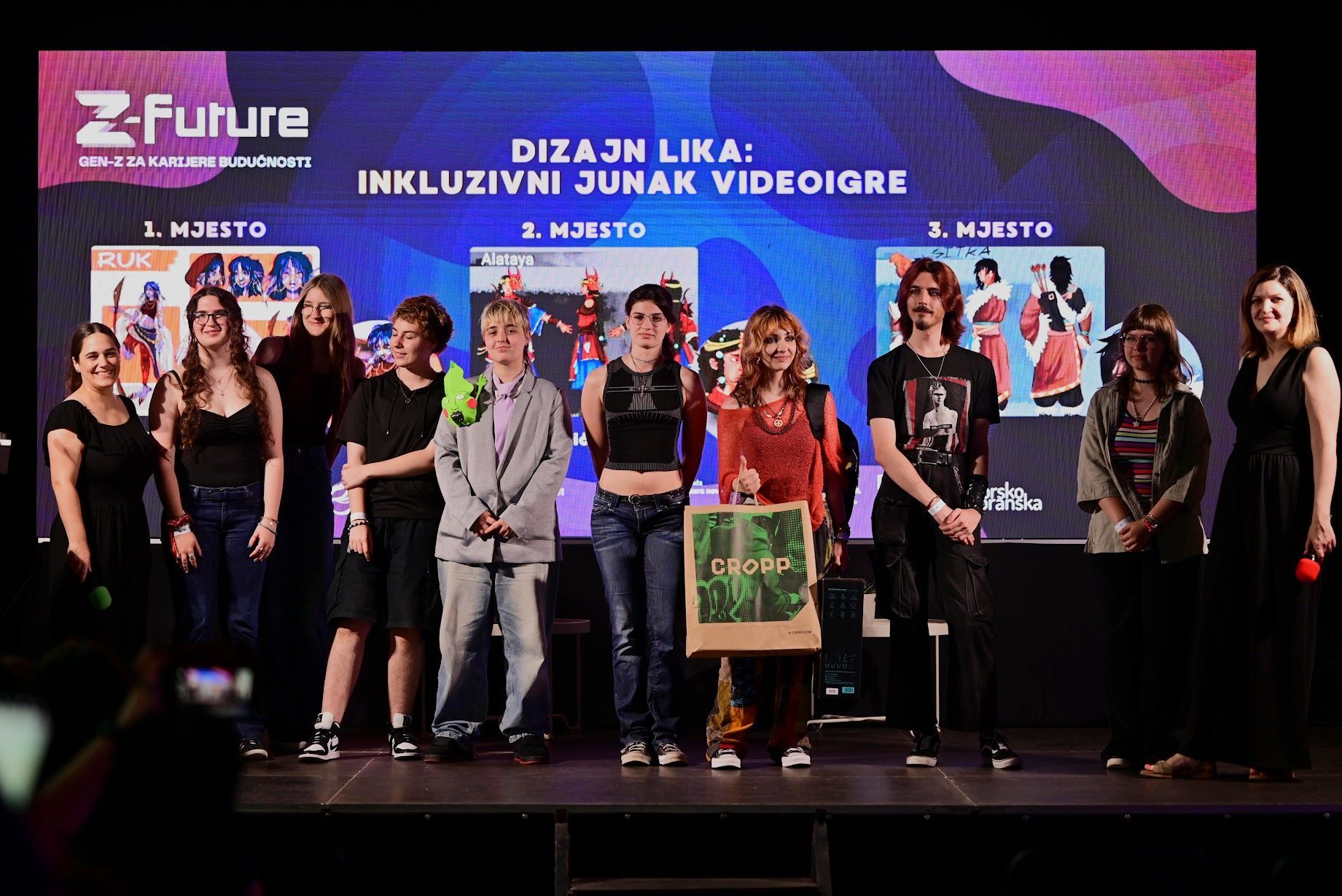
The official award ceremony and exhibition of works took place at the Expo Gamers event in Opatija on Saturday, May 30, 2025.
All winners were invited to the stage, where they had the opportunity to present their crafted and awarded works.
More about the project
Briefly about the project
GenZ for Careers of the Future (Z-FUTURE II) is the second edition of the highly successful project of the 3rd Dragon Association and partners in 2026 aimed at strengthening the capacities of young people for future careers through a series of educational activities and events. The project uses various methodologies to provide young people with the necessary skills and knowledge for a successful entry into the video game industry and digital arts, while promoting inclusion, creativity and safety in the digital world.
Project objectives
- To empower young people for careers in the video game industry and digital arts by providing practical knowledge and skills.
- Promote inclusion and diversity through art and technology.
- To encourage the creativity of young people through an art and literary competition and exhibition of works.
- Connecting young people with industry experts and mentoring support to develop their careers.
Activities
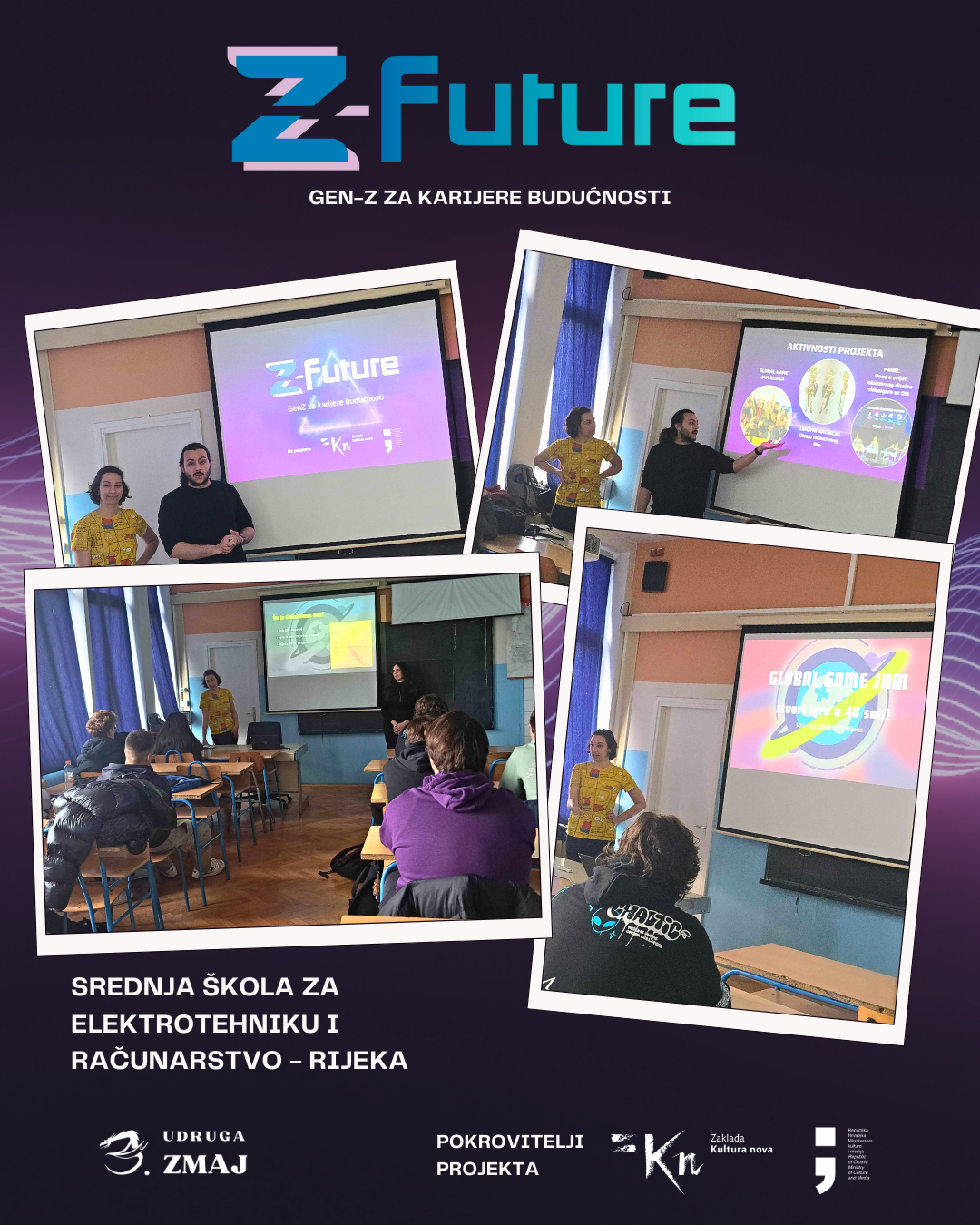
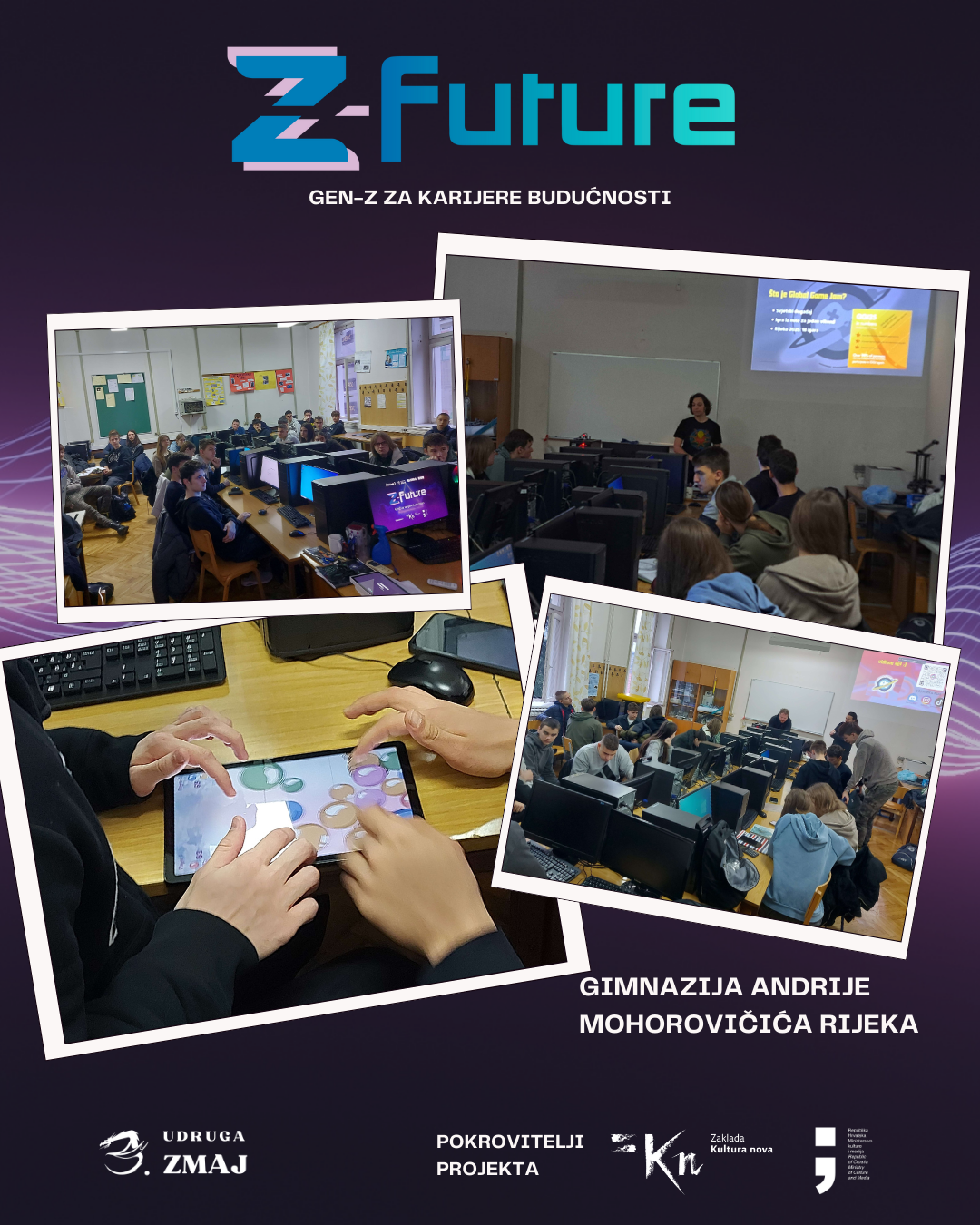
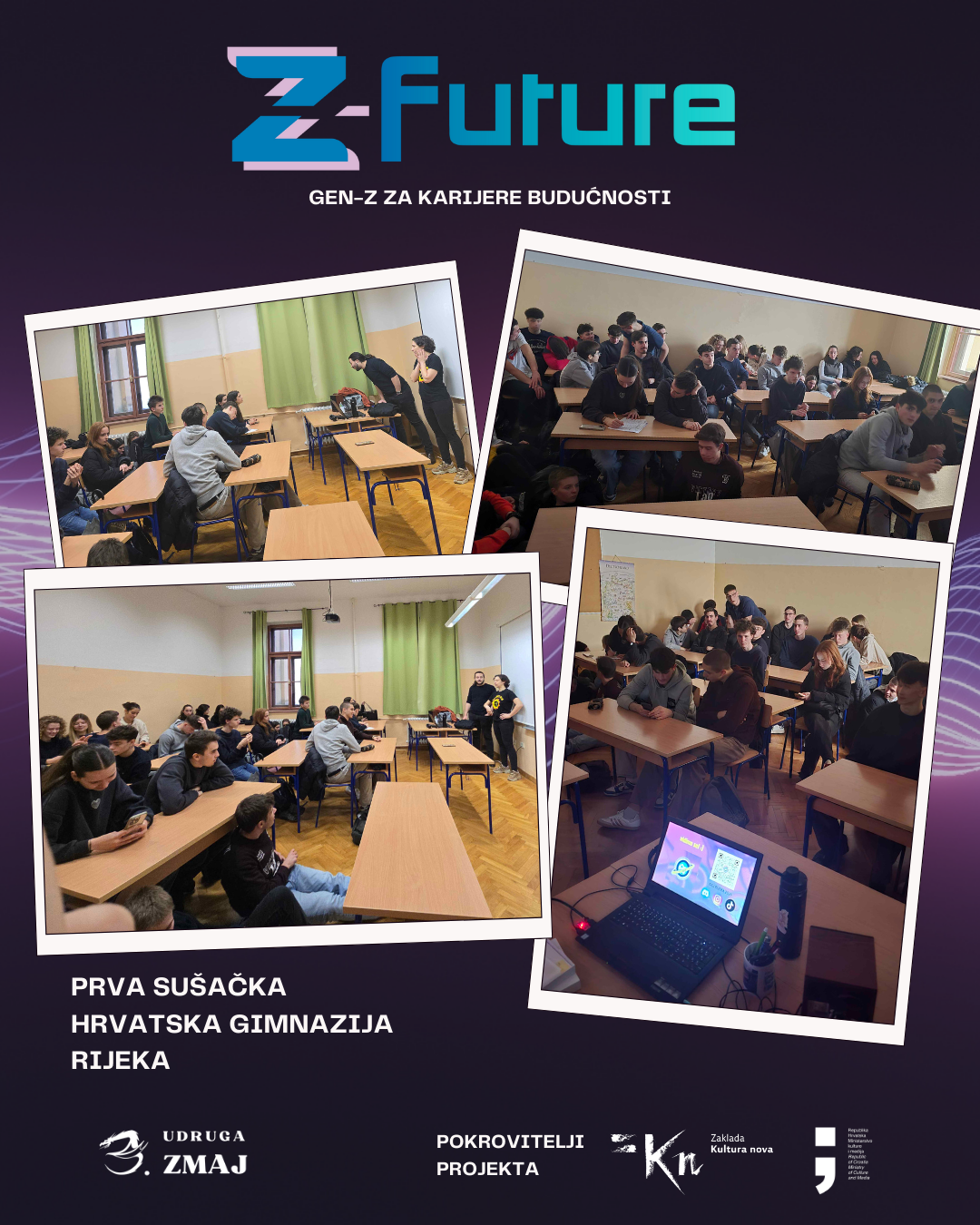
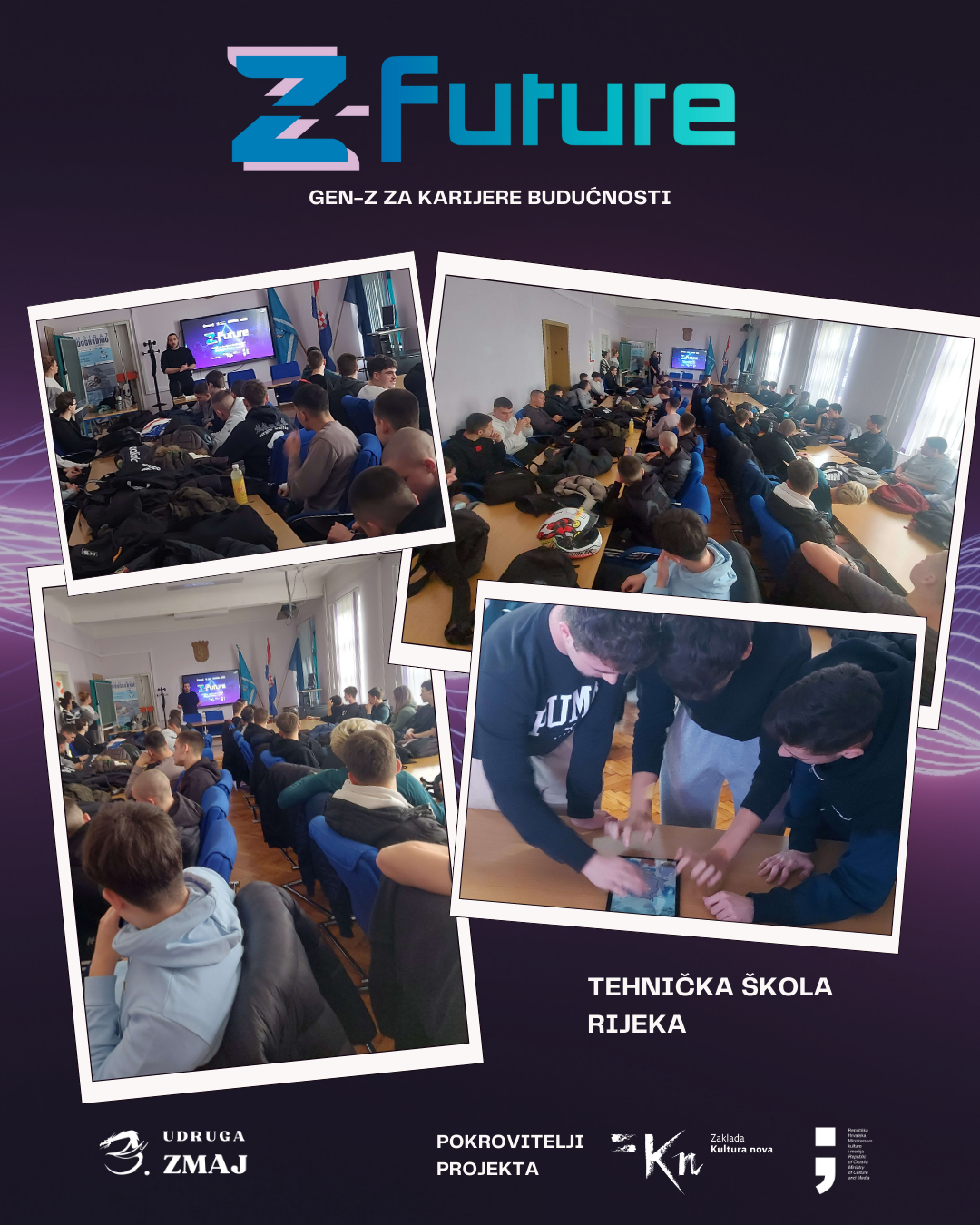
- Lectures in high schools: "What is Global Game Jam - how to make a game in 48 hours"
- January 2026
- held in 4 high schools and 1 faculty: Andrija Mohorovičić Gymnasium, First Sušačka Croatian Gymnasium in Rijeka, High School for Electrical Engineering and Computing, Technical School Rijeka and Academy of Applied Arts in Rijeka
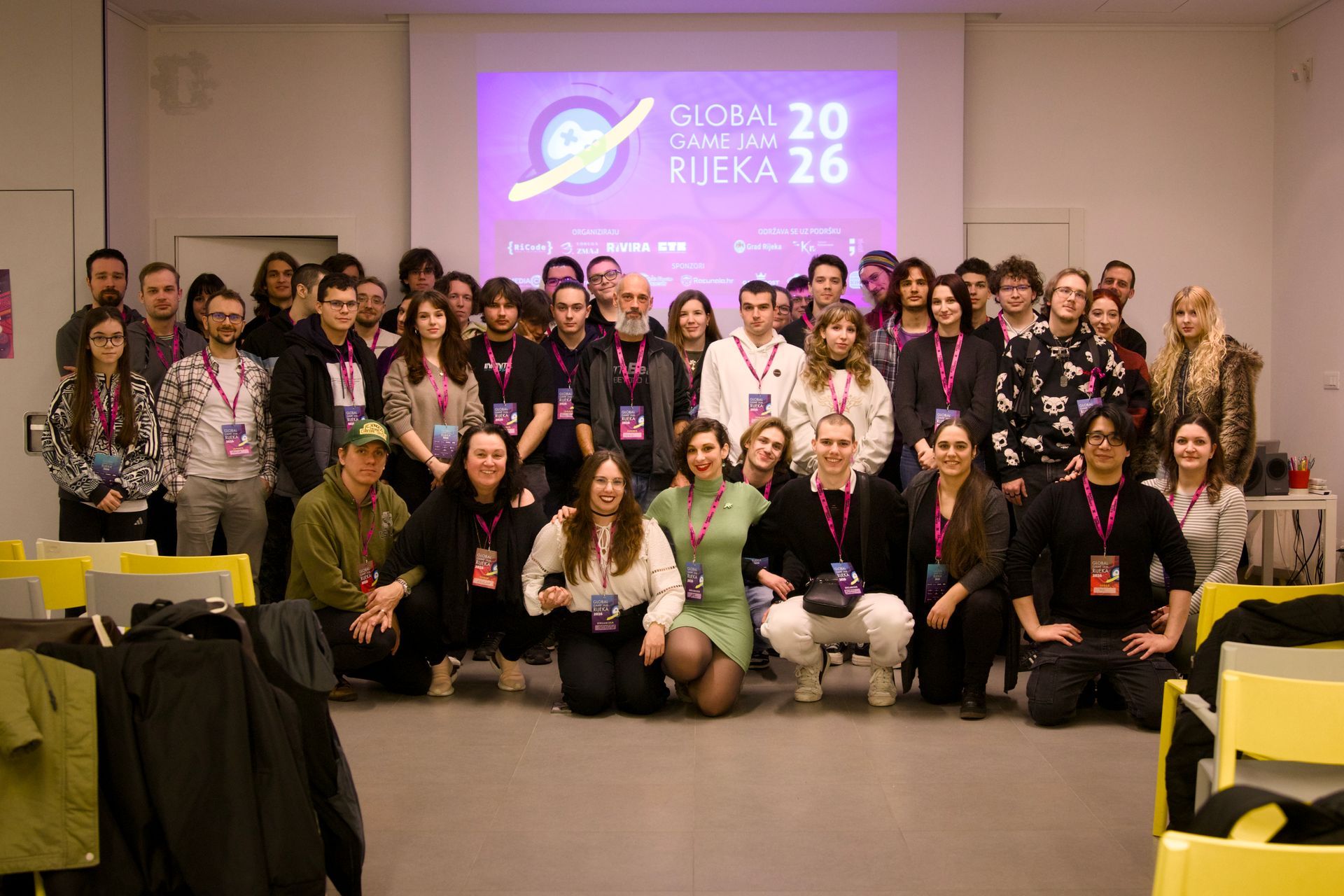
- "Global Game Jam Rijeka 2026" competition, a two-day team competition in video game development
- 30.1. - 1.2.2026.
- 50 participants, with 11 games produced, 3 of which were produced by high school students
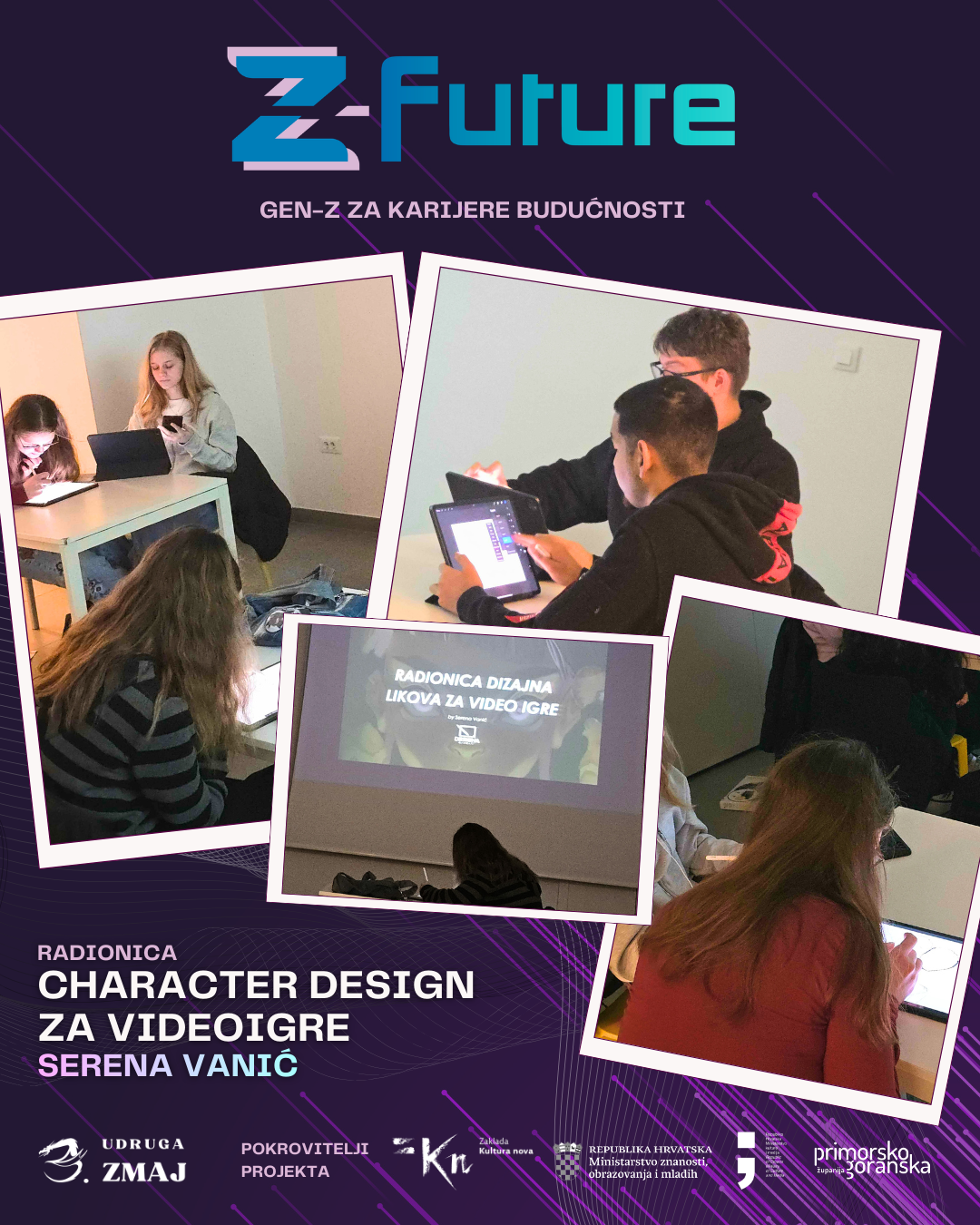
- Workshop - Character Design for Video Games
- Serena Vanić, Designa craft
- 24.2.2026.
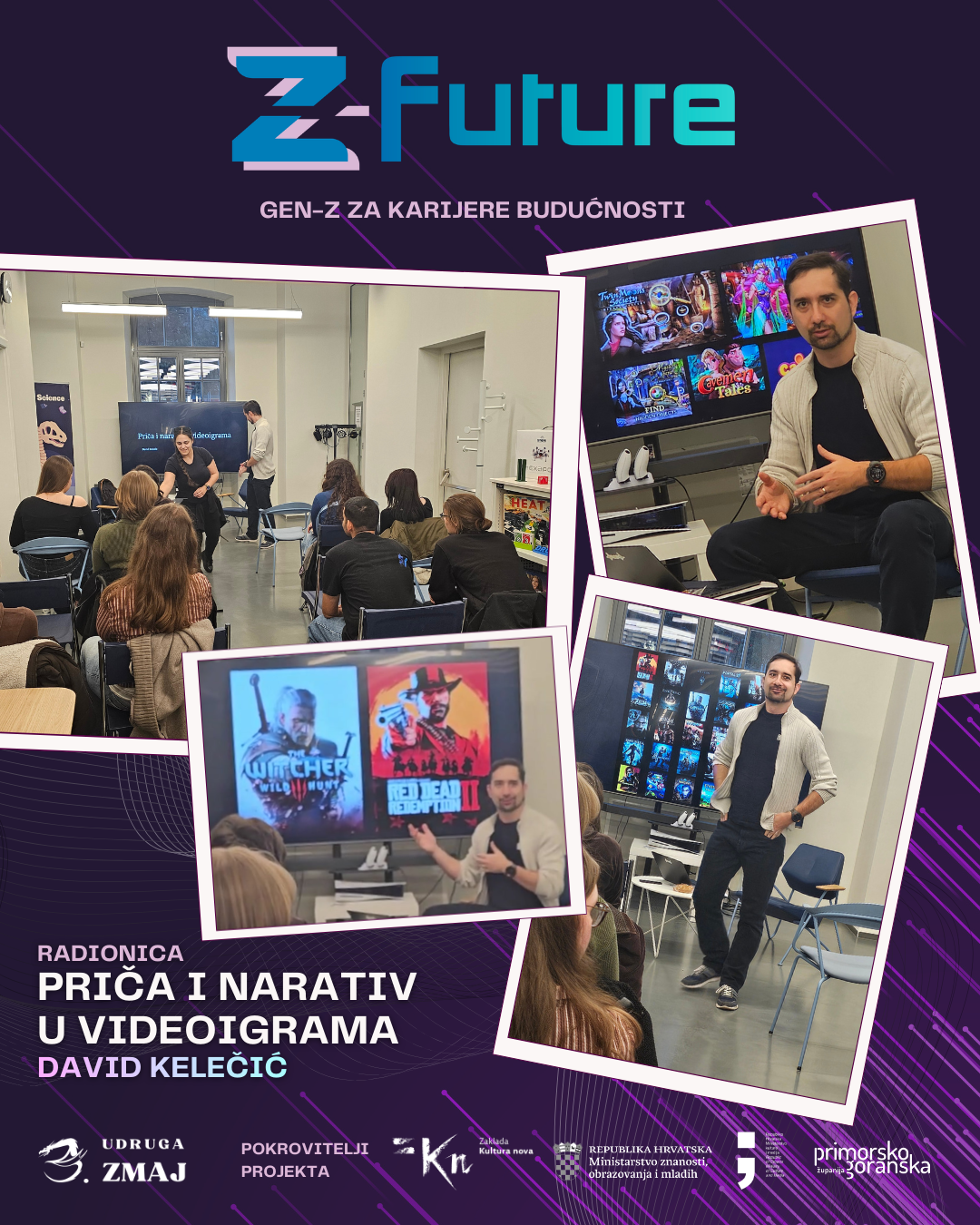
- Workshop - Story and Narrative in Video Games
- David Kelečić, Crazy Labs Video Game Studio
- 27.2.2026
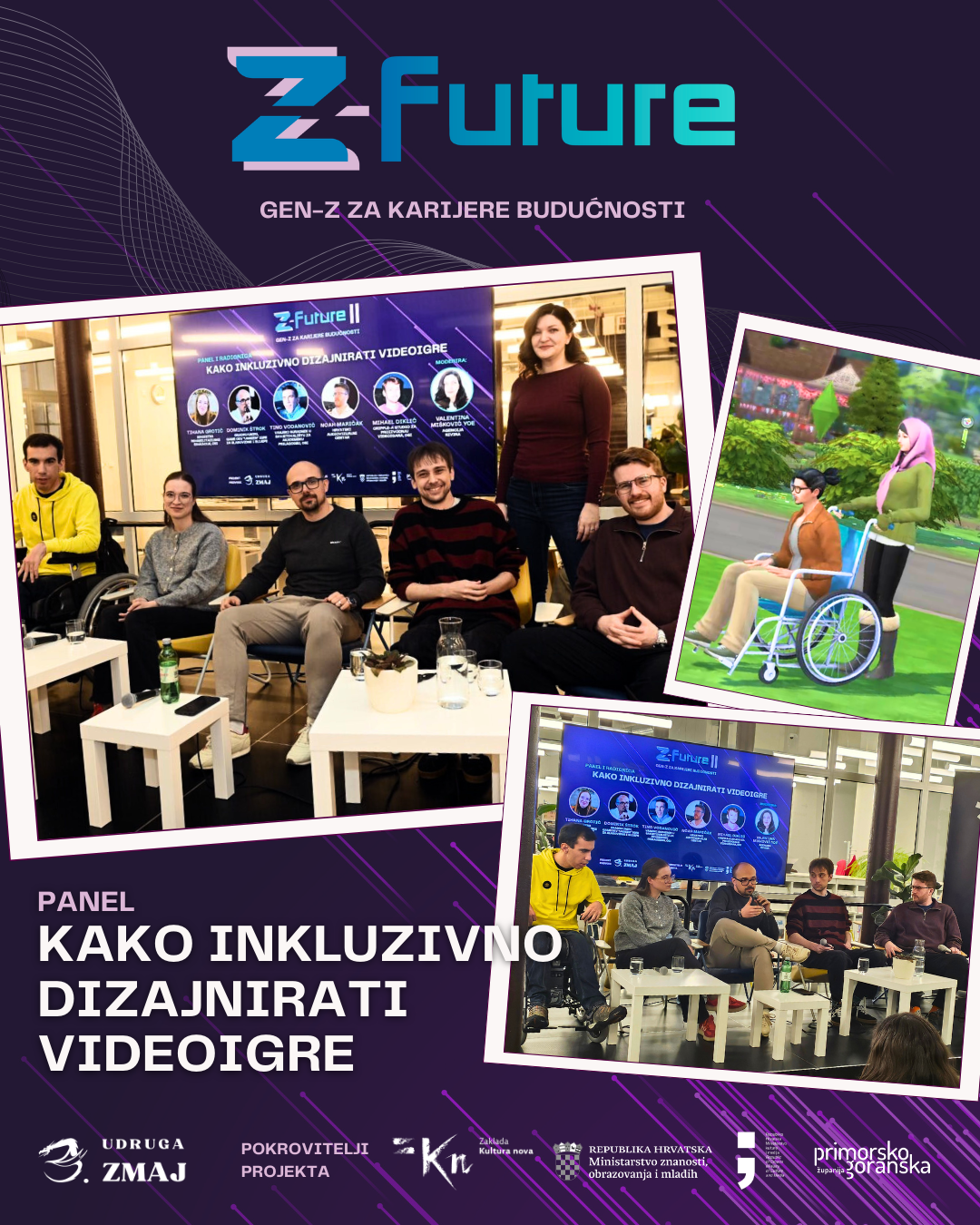
- Panel - How to Design Video Games Inclusively
- 11.3.2026., Rijeka City Library
- Moderated by Valentina Mišković Yoe, Rivira
- Tihana Grotić, Master of Educational Rehabilitation, OSI
- Mihael Diklić, Cripple-A Video Game Studio, OSI
- Tino Vodanović, University of Rijeka, OSI
- Benjamin Noah Maričak, Croatian Audiovisual Center
- Dominik Štrok, Faculty of Civil Engineering in Rijeka, producer of the game "Unseen" for the blind and visually impaired
- Art competition "Character Design - Inclusive Video Game Superhero"
- competition for high school students, applications open from 17.3.-24.4.2026.
- Expo Gamers - 29.-30.5.2026, Opatija
- Various educational and entertaining lectures and workshops as part of the program, intended for pupils and students.
- Award Ceremony and Exhibition of Works from the Art Competition "Character Design - Inclusive Video Game Superhero" at Expo Gamers
THE SECOND PART OF THE PROJECT IS ANNOUNCED, fall 2026.
- Creating a professional portfolio for creative digital industries
- Sound and music in games and movies
- Character animation for video games
- 3D modeling and texturing for games
- 2026 Retention
The project was funded by the Kultura Nova Foundation, the Ministry of Science, Education and Youth, the Ministry of Culture and Media of the Republic of Croatia, and the Primorje-Gorski Kotar County.
ART COMPETITION FOR HIGH SCHOOLS
Character Design - Inclusive Video Game Hero

The Association 3. zmaj invites all high school students to participate in the art and literary competition Character Design - Inclusive Video Game Hero.
The goal of the competition is to encourage young creatives to design original and inclusive characters for video games and to reward and exhibit the best.
Inclusion in design means that characters can represent different identities and communities – for example, people with disabilities, different ethnicities, gender and sexual identities, different physical features, or other elements that promote diversity and equality in the gaming industry.
The best works will be awarded valuable prizes and presented at an exhibition during Expo Gamers 2026.
Who can participate?
The competition is open to all high school students residing in Croatia.
How to approach the competition and the topic of inclusion?
To help you understand the aim of this competition as clearly as possible, we would like to help you with the definition of inclusion. Inclusion is the process of ensuring equal opportunities, respect and acceptance of all individuals, regardless of their cultural, physical, psychological or socio-economic differences. It is based on the idea that diversity enriches society, enabling everyone, including people with disabilities, to access education, work and social life without discrimination.
These principles underpin inclusive design in video games: characters are designed to not just represent one “typical” look or experience, but to reflect the diversity of the world we live in. An inclusive character is not defined just by what they look like, but also by what kind of story they tell, what abilities they have, and how they move through the game world.
In inclusive design, it is important to think about how a character lives in the game world: how they move, communicate, collaborate with others, or use their unique skills. Some characters may use assistive technology, have different ways of perceiving the world, or bring perspectives that are rarely seen in popular media. It is precisely such characters that can open up new ideas for gameplay, story, and aesthetics of a video game.
Before you start drawing a character for this contest, we invite you to think about who the heroes are that we never see in digital media. Inclusion in video games is not just a “check box” to check; it’s an opportunity to design a character that brings a whole new perspective to the game world, not just a new look.
These are some examples that you can follow:
1. Be careful with superpowers and disabilities
We are used to popular culture content where the development of a character’s story is reduced to overcoming a physical disability – a disability or physical disability becomes a magical superpower. While such content is popular, consider the consequences of such a depiction: if a blind character sees better than others through magic, we have effectively erased their disability, which is not possible in reality. Can people with disabilities really identify with such characters? We also invite students to consider – is disability the only and most important point of a person’s identity?
Challenge: How do you design a hero who fights against real barriers? If you imagine a character in a wheelchair, they are not a super-powered tank, but a part of everyday life in a world that is not always adapted. That character's strength may lie in a skill, intellect, or character trait, while disability remains a real fact of their life.
2. Heroes we rarely see: who is "invisible"?
Inclusion also means creating characters who are not the typical heroes we often see in movies and games. Think about people who are often overlooked or in the background in stories, but could actually be interesting and strong protagonists who subvert expectations.
Challenge: Imagine, for example, an older woman in a dystopian world ruled by powerful men. She is not the young and physically strong heroine we often see in action games. Her advantage could be something else: experience, resourcefulness, wisdom, or the ability to outsmart a system that underestimates her. Heroes don't always have to be the strongest or fastest. Tell us where their greatest strength lies.
3. Autism or neurodivergence: show it with a picture, don't just tell us
Some traits, like autism or other forms of neurodivergence, are not immediately apparent at first glance. They are often noticed through the way a person experiences the world or communicates with others.
Challenge: Think about how you can convey this through your character design. Maybe your character wears noise-canceling headphones because the world around them is too loud. Maybe they use small objects to calm themselves and focus (fidgets), prefer softer clothing, or avoid eye contact. Maybe their biggest challenge in the game world is something that seems simple to others: like walking through mud or getting through a crowd. Instead of just writing it down in the character description, try to convey these traits through their appearance, posture, or the situation they find themselves in, and of course, don’t forget to tell us how their superpower interacts with their difficulty.
How to prepare an application?
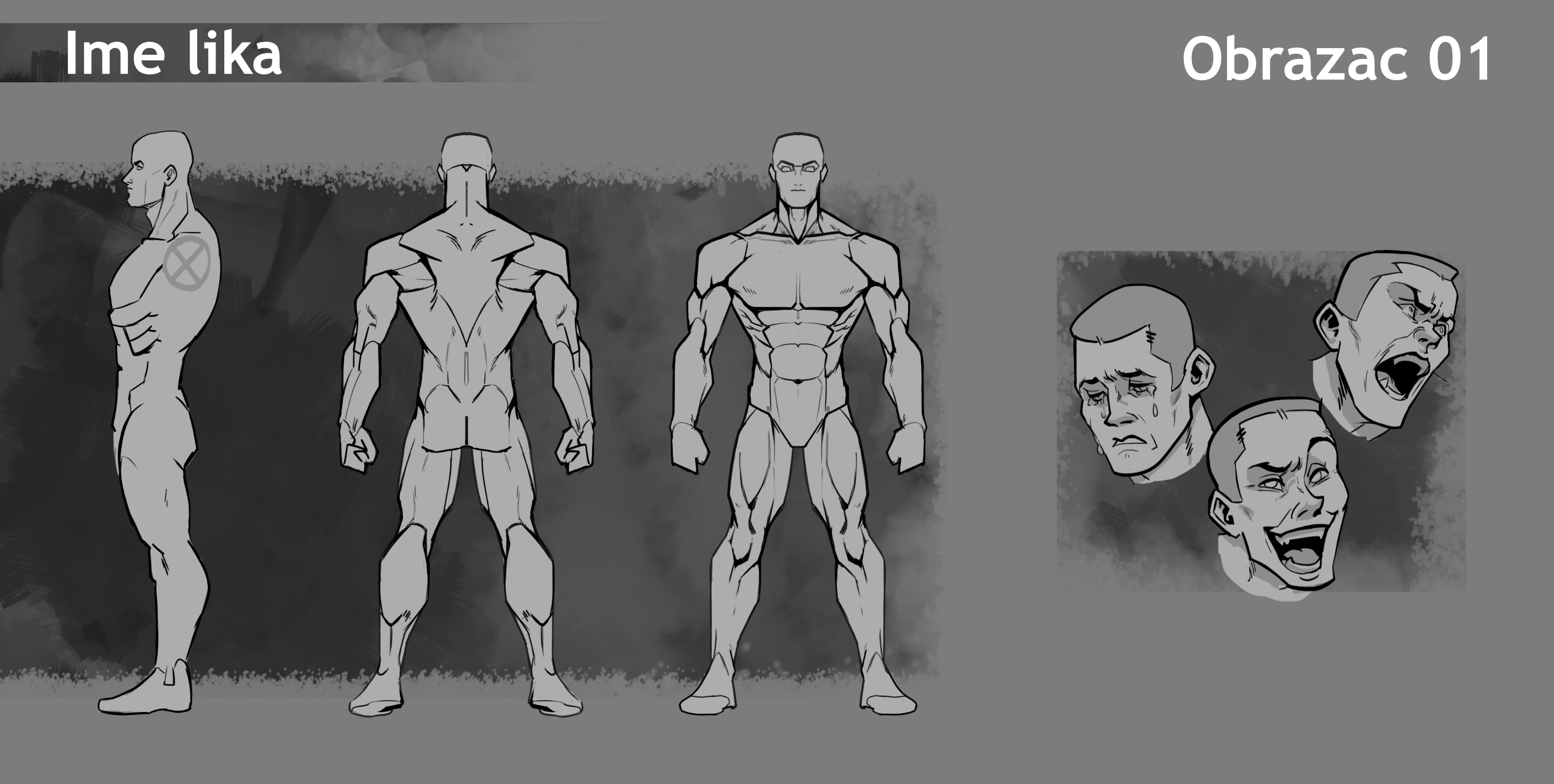
Once you have designed the original character, you need to present it in the form of a Character Design Sheet and Action Pose along with a very brief concept description that describes the character.
A Character Design Sheet is a drawing that serves as a detailed presentation of a character. It is used in the video game, animation, and comic book industries, and its goal is to clearly and concisely show how a character looks, behaves, and moves.
The mandatory attachments to the competition include an example of the Character Sheet and action pose layout, as well as blank forms on which you need to apply your works and submit them with the application.
Other notes:
- Participants can use any artistic style: semi-realistic, realistic, stylized, manga, etc. The character, i.e. the work, must be in color and must be a digital drawing.
- Works must be digital. All works must be submitted in image formats: PNG, JPG, and the resolution of the works must not exceed 3,000 px, i.e. the size must not exceed 15 MB.
- The work must be completely original, meaning that it must not contain any part that is taken from someone else's work, either in whole or in part. This means that the competition does NOT accept works generated by artificial intelligence. The statement of authenticity is an integral part of the application form.
Required elements of the application
Below are all the elements that an application should contain. Applications that do not prepare a Character Sheet according to the instructions will not be considered.
1) Form 1 - Character Sheet:
a) Main character design
It is necessary to draw the character in a neutral stance, shown from three angles: front, side and back. This is to clearly see how the character looks from all perspectives. Special attention should be paid to body proportions and consistency in the depiction.
b) Facial expressions and emotions
The design should include two to three facial expressions that depict the emotions that the character uses most often. The emotions should be carefully chosen to best convey the character's personality. The goal is to be able to read what the character is like through their face; cheerful, cold, calculating, aggressive, shy, or something else.
2) Form 2 - Action pose or scene:
Once the basic Character Sheet is created with multiple angles and emotions, it is necessary to create a final illustration of the character in motion, using tools or weapons, etc. This illustration should clearly show the character's abilities in action. For example, if the character can control fire and use it in combat, this should be obvious at first glance in the action pose. The focus of the action pose should be solely on the character and their action.
3) Form 3 - Textual description of the character:
A short written description should introduce the character, their personality, the role they play within the game, and how the character is inclusive. Inclusion can refer to various aspects: physical characteristics, disability, age, identity, culture, etc. Attached to the competition is a document with questions you need to answer to describe the character.
4) Sketches showing the production process:
Along with the final design, you must submit a compilation of at least two sketches that show the development of the idea. These can be early versions of the character, alternative designs, experiments with body shape, clothing, or other elements. Arrange several sketches on one document/page and attach them as one document to the application form (JPG or PNG format).
5) Parent/guardian consent:
Be sure to attach the signed consent, which is included in the mandatory attachments to the tender.
Judges' panel
The submitted works will be evaluated by a panel of judges:
- Goran Gluščić, Raw Fury, senior programmer
- Iva Carević, Nanobit, 2D artist
- Serena Vanić, Designa obrt, 2D artist
- Mihael Diklić, Cripple-A studio, founder and PWD
- Tihana Grotić, Master of Rehabilitation Education, OSI
- Tino Vodanović, external associate at the Academic Adjustment Counseling Center, OSI
- Jonathan Yoe, Expo Gamers team (Rivira)
- Valentina Mišković Yoe, Expo Gamers team (Rivira)
- Marta Glažar, Expo Gamers team (Association 3. zmaj)
Award ceremony
The award ceremony will be held as part of the Expo Gamers event, which will be held in Opatija, from 29-30.05.2026. in the Marino Cvetković sports hall. An exhibition of all works will also be held as part of the event. All awardees will be notified in a timely manner by email with information.
All registered authors will be notified of the results of the competition by email, no later than 12.05.2026.
Deadline for submitting: Friday, April 24, 2026, by 8:00 PM.
For additional information, please contact us by email at udruga@3zmaj.hr. If you notice that you have attached the wrong attachment, written the wrong information, etc., please send us the correct version by email. In that case, please use the same email address that you used in the application form.